Hierarchy Archive

Loading...
The composition of this painting is close to that of a large altarpiece painted by Altomonte in 1723-24 for high altar of the church of the Carmelites (Karmeliterkirche) in Linz. The painting is signed and dated bottom right: Martino Altomonte / Pinx. Ao. 1737.
Read More...
Child, Donkey, Egyptian, Mother
Loading...
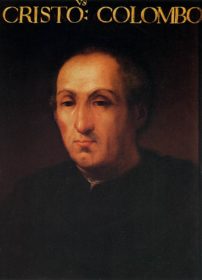
Christopher Columbus (c. 1451-1506) was a navigator, colonizer and explorer whose voyages across the Atlantic Ocean led to general European awareness of the American continents in the Western Hemisphere. This portrait was painted half a century after his death. There are no certain contemporary images of the navigator, who was only one among many when he first set out in ships funded in part by Medici money.
Read More...
Man
Loading...
Cephalus and Procris were in Greek mythology a young couple, newly married, whose love was destined to end in tragedy. The figures in the painting are probably by another hand most likely to be Alsloot’s principle collaborator, Henderick de Clerck.
Read More...
Cephalus, Cephalus And Procris, Couple, Greek, Procris
Loading...
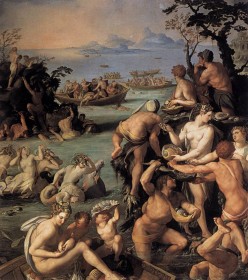
The Studiolo is a tiny chamber in the Palazzo dei Priori (Palazzo Vecchio), accessible by a hidden spiral staircase. It was dedicated to the geological, mineralogical and alchemical interest of Francesco I de’ Medici, son and successor of Cosimo I. Its walls are lined with two tiers of oil paintings on slate or panel that act as doors for cupboards containing Francesco’s scientific books, specimens, and instruments. Alessandro Allori’s contributions to the decoration of the Studiolo in the Palazzo Vecchio included the Pearl Fishers. Allori was the follower of Agnolo Bronzino, and his style imitates the cool, smooth manner of his teacher. Exquisite male and female nudes, human and mythological, play about on rocks, dive off boats, and bring up shells overflowing with seawater and […]
Read More...
Boat, See
Loading...
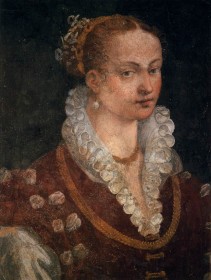
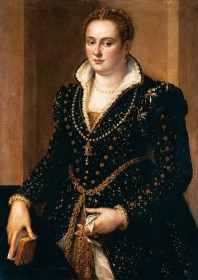
Grand Duke Francesco I de’ Medici was a man of profound and obsessive passions. The Uffizi galleries, which he established, were one, Bianca Cappello (1548-1587), his mistress, and afterwards, the second wife, was the other.
Read More...
Bianca
Loading...
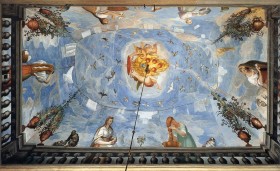
Pure genre scenes like the view of women hanging clothes to dry or combing their hair in the vault of a loggetta in the Palazzo Pitti are extremely rare in the monumental form of fresco decorations in the sixteenth century. Comparable scenes are, however, regularly found as elements of landscapes or grotesques.
Read More...
Woman