(No Ratings Yet)
 Loading...
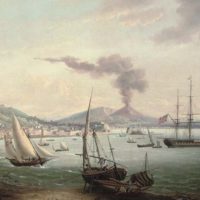 An English Frigate In The Bay Of Naples by John Thomas Serres
 Figures on a beach near Naples by Giovanni Serritelli
 View of Brussels from the NorthEast by Hercules Seghers
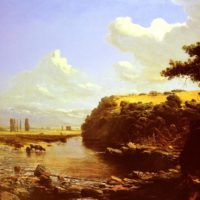 Cattle watering in a River Landscape, believed to be Chile by Thomas Jacques Somerscales
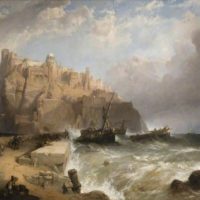 The Castle of Ischia by Clarkson Stanfield
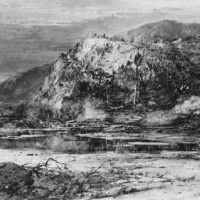 Landscape with Rocky Hills and Stream by William Louis Sonntag
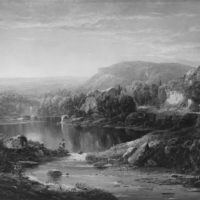 Landscape with Waterfall and Figures by William Louis Sonntag
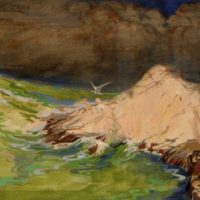 The Tale Of Kynon by George Sheringham
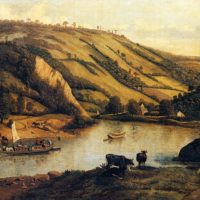 An Extensive River landscape, Probably Derbyshire, With Drovers And Their Cattle In The Foreground by Jan Siberechts
 Landscape with Rainbow, Henley-on-Thames by Jan Siberechts
Painting Hierarchy or the Hierarchy of Genres are the six main types of painting:
1. History Painting
2. Portrait Painting
3. Genre Painting
4. Landscape Painting
5. Animal Painting
6. Still Life Painting
Most of the paintings falls in one or more of these categories and are defined, interpreted accordingly.

 (No Ratings Yet)Loading...
In England Agasse was praised for his extreme devotion to art, of his marvellous knowledge of anatomy, of his special fondness for the English racehorses, and his excellence in depicting them.
 (No Ratings Yet)Loading...
Theodoor Aenvanck’s Fruit, like many other floral compositions in 17th-century painting, also represents the process of decay and destruction.
 (No Ratings Yet)Loading...
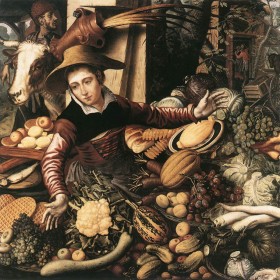
One of the several one-figure compositions of the artist painted in the 1560s and showing the influence of the Italian painting transferred to the Low Countries by the Romanists.
 (No Ratings Yet)Loading...
A remarkable feature of this painting is the the still-life and a biblical scene composed together. The effect of the compostion was strongly disturbed by cutting the lower part of the painting (about 9 cm was cut for unknown reasons).
 (No Ratings Yet)Loading...
Pieter Aertsen was a Dutch painter who had a workshop in Antwerp for several years. He painted altarpieces, but also peasant scenes with a moralizing undertone and kitchen still-lifes with religious themes in the background. He continued this work following his return to Amsterdam in around 1557, concentrating henceforth more on the latter genre. This painting may have been produced during his Amsterdam period. The subject of the work has long been debated, although we can be sure it is not simply a peasant scene. it was once believed to be a portrait of the artist’s family, but that hypothesis was rejected some time ago. The scene has all the elements of a rural booze-up. Much drink is being consumed, sausages grilled and bacon fried. […]