17th Century Archive

1 Star2 Stars3 Stars4 Stars5 Stars (No Ratings Yet)
Loading...

The first version of  Massacre of the Innocents by Rubens was made in 1612. Here is represented the second version made in 1638, which resembles some similarities to the original while brutalizes some aspects even more than the first one. The subject matter and the scene is elaborately described in the first version’s iconography. The second version is painted after 25 years of the first one and it hasn’t lost its impact. Actually, Rubens has made it more intense and gruesome than the first one. More realistic approach than the first version In here, the emphasis is on the use of weaponry to kill infant. In the first version, soldiers were depicted in a moment in which they were killing either snatching the infants from […]

Read More...

, , , , , , , , , ,

1 Star2 Stars3 Stars4 Stars5 Stars (3 votes, average: 3.00 out of 5)
Loading...

Peter Paul Rubens, the 17th century Flemish Baroque painter painted the first version of the biblical subject Massacre of the Innocents in 1612. It took him two years to finish the painting. It showcases the intense scene of King Herod’s (Herod the Great) soldiers killing the infants of Bethlehem during his reign. Massacre of the Innocents The subject of the painting is the intense massacre of the infants during the time of Herod the Great who after a prophecy, got furious that a Jew boy (Jesus) would uproot his grand reign. After getting outwitted by the Magi, and not knowing which baby would be the reason of his diminishing reign, in fury, he ordered to kill all the infants under age of two. It was […]

Read More...

, , , , , , , , , , ,

1 Star2 Stars3 Stars4 Stars5 Stars (1 votes, average: 5.00 out of 5)
Loading...

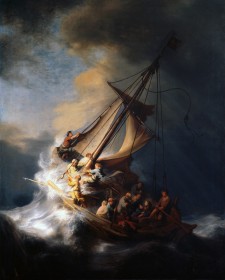
This dramatic illustration, “The Storm on the Sea of Galilee”,  is painted by the Dutch Golden Age master Rembrandt. It is a dramatic depiction of the ‘calming the storm’ miracle done by Jesus. Jesus did many miracles in his lifetime including walking on water, cursing the fig tree, turning water into wine and many more. Those miracles and anecdotes made his apostles and followers have more faith in him. Though, as it is obvious in the stories, Jesus never exhibited his powers in public until it was a sheer necessity. Here, he is crossing the Sea of Galilee with his apostles and other Jewish people. The sea was known for its sudden storms and taking lives of people. Such a storm came across with this […]

Read More...

, , , , , , , , , , ,

1 Star2 Stars3 Stars4 Stars5 Stars (No Ratings Yet)
Loading...

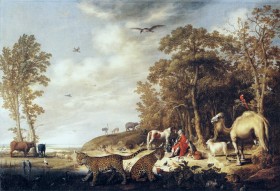
You may have heard about the mystical figure of Orpheus from the Greek mythology. But, I think the background story needs to be told to understand the essence of this artwork. Orpheus was a proficient poet and musician with the magical ability to mesmerize all living things with his music. It was an incredible expertise for a musician. That’s why, everyone was always so eager to hear him. The legend goes further with the death of his wife. To redeem her from the grip of death, he went to the underworld. By his music, the things living in underworld got mesmerized and allowed him pass all the way to the Hades – the underworld king. Hades heard about his misery and decided to let his […]

Read More...

, , , , , ,

1 Star2 Stars3 Stars4 Stars5 Stars (No Ratings Yet)
Loading...

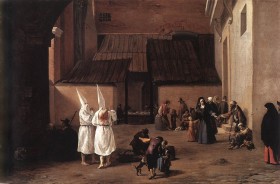
The two people in white robes with their backs wounded by their own torture pulled on themselves are called the Flagellants – the ones who torture themselves for their religious beliefs. It was a common practice Europe in around 13th and 14th century. People revered and honored them until the followers of Flagellantism aroused beyond the expectations of Roman Catholic Church and the Church denounced them heretics. After that the followers of the Flagellantism declined and people also started to ignore such self-harming religious persons. Their popularity declined drastically, though, even today, in different cultures flagellantism in different forms of self-harming exists. Whether it is the women’s self-harming in native African tribes or the 10th day of Muharram on which Muslims beat themselves in the […]

Read More...

, , ,

1 Star2 Stars3 Stars4 Stars5 Stars (No Ratings Yet)
Loading...

The most famous paintings in the world generally haven’t been found with any major historical events (except The Last Supper by Leonardo da Vinci and The Creation of Adam by Michelangelo). The subjects of most such paintings have been a portrait of a rich woman or a girl, a group or a portrayal of a landscape. The subject was nothing in particularly that much adorned or famous or important at the time those painting were being created. The subject got famous after the spectacular paintings by the painter got revealed towards the world and more importantly the unique features of those paintings which helped those paintings becoming famous. The represented painting, The Night Watch by Rembrandt van Rijn, doesn’t fit in the category. The subject […]

Read More...

, , , , , , , ,