 (No Ratings Yet)
 Loading...
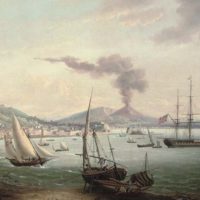 An English Frigate In The Bay Of Naples by John Thomas Serres
 Figures on a beach near Naples by Giovanni Serritelli
 View of Brussels from the NorthEast by Hercules Seghers
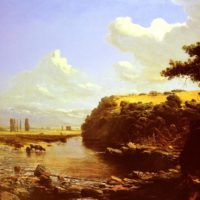 Cattle watering in a River Landscape, believed to be Chile by Thomas Jacques Somerscales
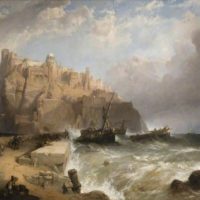 The Castle of Ischia by Clarkson Stanfield
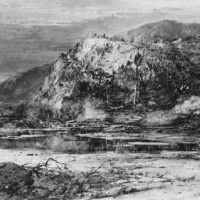 Landscape with Rocky Hills and Stream by William Louis Sonntag
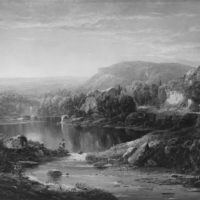 Landscape with Waterfall and Figures by William Louis Sonntag
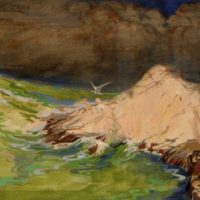 The Tale Of Kynon by George Sheringham
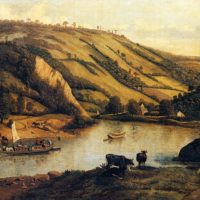 An Extensive River landscape, Probably Derbyshire, With Drovers And Their Cattle In The Foreground by Jan Siberechts
 Landscape with Rainbow, Henley-on-Thames by Jan Siberechts
Among the different types of paintings, Portrait Paintings are comprehensive ways to capture a man’s glory, disposition or social stance in one single moment. It is a style which quickly captures the viewer’s attention and gives a quick glimpse in the past of the depicted person or group. Portrait paintings stand strong among the other types of paintings.
According to Oxford Dictionary, “A painting, drawing, photograph, or engraving of a person, especially one depicting only the face or head and shoulders.”
Though, the last words of the definition aren’t the mandatory properties of a portrait as the type has grown into much more complex and various ways of depicting a person.
Portraits could represent a person, an artist or a group of people. They are just the simple depictions of people. Still, they aren’t just profiles of the persons. Sometimes, portraits could tell us more history about the contemporary times than a city’s landscape from the same era.
For instance, during the Dutch Golden age, people were afraid of expressing their pride through an extravagant portrait as it was considered bad during the time. Thus, the total of more than 1 million portraits from that time were mostly dull, expressionless and similar. You won’t get this information in the brilliant vista of a cityscape.
Even the most famous painting in the world is also a portrait. Other famous paintings like Girl with a Pearl Earring and American Gothic are also different types of portrait as you would know about them in detail at here.
Artists would generally have very limited space to include any significant object in the portrait as compared to a Landscape Painting or a Still Life Painting where he can add all the objects he could imagine. Thus, the included objects, scenes, background or other elements would be chosen very carefully to represent the accurate impression of the person or persons portrayed. Artist would care of the littlest details to represent the disposition or the concurrent impression of the person and would eliminate any redundant objects or implications. It is somewhat similar to still-life in which every included element generally holds some meaningful symbolism.
Thus, portraits could embody the person’s disposition, general impression, importance, significance, background, stance in society, history, a specific phase or the whole society’s outlook through a single representative person.
According to the subject, context or need of the artist, portrait paintings have developed many types to distinguish or signify different characteristics. Each type has been developed over the different centuries or ages and have matured in today’s portraits. This, findings and techniques of portrait paintings have significantly helped the portrait photography in modern times. You can find a mode called “portrait” in your phone’s camera. The term is derived from here, obviously.
If you haven’t read our post on the Different Types of Portraits, you can read about it on the given link.
 (1 votes, average: 5.00 out of 5)Loading...
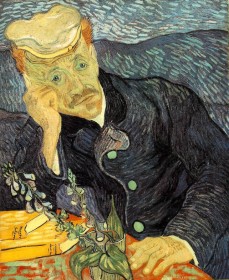
After his mental breakdown in December 1888, Vincent Van Gogh went under treatments at various clinics including a Hospital in Arles and the Asylum of Saint Remy. But, before his death he was taking aid under a physician Dr Paul Gachet in Auvers-sur-Oise for which he moved near Paul Gachet’s in Auvers. It was sold for $ 82.5 million in 1990 equivalent around $ 140 million in today’s price-rate. Thus, it became the World’s Most Expensive Painting at the time and is still the highest price paid for art at a public auction. Most of the final paintings by Van Gogh have become spectacularly precious and highly-wanted. As if people want to buy those paintings to collect the last memories of the artist. His first impression […]
 (22 votes, average: 4.27 out of 5)Loading...
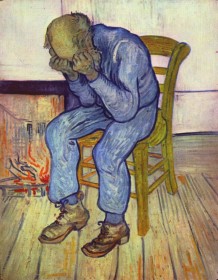
Displaying mental distress with insane feelings of the sorrow, the picture describes an old man crying over for unknown reasons. He is stressed out and looks unable to bear any more stress as he is trying to hide from the tensed world by concealing his eyes behind his fists. The support by the elbow represents his weakness and inability to cope more with the undesired situations. The strongly closed fist may represent the anger inside him which has aroused after many years of anxiety and strain as those are the essential factors for anger. The flames in the fireplace at backdrop may represent the fiery agony by which the old man is suffering and has become an infinite struggle. Van Gogh firstly made draft of […]
 (3 votes, average: 3.67 out of 5)Loading...
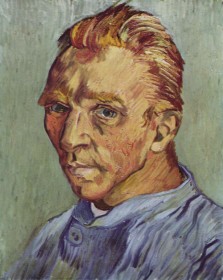
Being in our post of Legend of Vincent van Gogh, the Dutch artist’s this priciest portrait with a huge price tag of $ 71.5 million around 15 years before in 1998 was the third costliest painting of all the time and fourth if we consider the price-inflation. And it is still an impressive rank for a portrait. Alongside with its enormous price-tag there are other facts which make this painting unique from the rest of the self-portraits by Vincent van Gogh which are totals more than 35. This self-portrait executed in 1889, was the last self-portrait by the artist. After that he majorly focused upon the cypresses and wheat fields. Moreover, this is the only painting depicting the artist without beard. As Van Gogh’s many […]