 (No Ratings Yet)
 Loading...
 An English Frigate In The Bay Of Naples by John Thomas Serres
 Figures on a beach near Naples by Giovanni Serritelli
 View of Brussels from the NorthEast by Hercules Seghers
 Cattle watering in a River Landscape, believed to be Chile by Thomas Jacques Somerscales
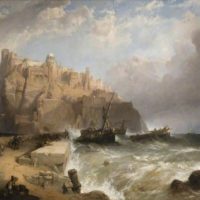 The Castle of Ischia by Clarkson Stanfield
 Landscape with Rocky Hills and Stream by William Louis Sonntag
 Landscape with Waterfall and Figures by William Louis Sonntag
 The Tale Of Kynon by George Sheringham
 An Extensive River landscape, Probably Derbyshire, With Drovers And Their Cattle In The Foreground by Jan Siberechts
 Landscape with Rainbow, Henley-on-Thames by Jan Siberechts

 (6 votes, average: 3.83 out of 5)Loading...
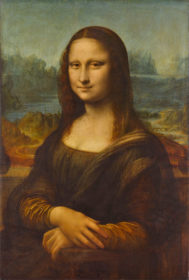
Mona Lisa has been described as the best known, the most visited, the most written about, the most sung about, the most parodied work of art in the world. The prominent reasons for its fame varies from its well-known renaissance creator Leonardo da Vinci, his then-new technique called Sfumato developed by the same artist and the most prominent reason of all being the mystery of depicted woman’s smile. Who Painted Mona Lisa Renowned as a genius in the world, who made many unbelievable inventions, Leonardo da Vinci painted Mona Lisa using his self-invented Sfumato technique, one of the four canonical painting modes of the renaissance. His other known creations are The Last Supper (a Fresco), Vitruvian Man (a drawing) and Virgin of the Rocks. Know more about him here. Mona […]
 (No Ratings Yet)Loading...
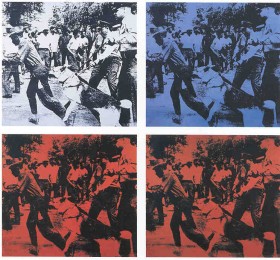
Andy Warhol, the Pope of Pop Art, made this painting (a part of the series known as Death and Disaster or simply known as Disaster Series) after being inspired by an airplane crash news he read in the New York Mirror of June 4, 1962. The painting describes a scene from a peaceful march during the Birmingham Campaign of 1963 in which the protesters, led by Martin Luther King Jr., Ralph Abernathly, Fred Shuttlesworth and Rosa Parks, were being disrupted by police in the current painting. It is one of the known painting of Andy Warhol and though, not perfectly fitting under series called Death and Disaster, he insisted including Race Riots paintings into the series. Birmingham Riots, 1963 The Birmingham Riots of 1963 also known as Birmingham […]


 (6 votes, average: 3.50 out of 5)Loading...
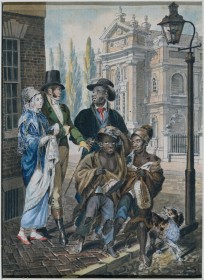
Portrayed woman was a concubine in the harem of one of the kings of the Ottoman dynasty and most probably the king lived between 1860 to 1926 as that’s the lifespan of the French artist, Charles Amable Lenoir, who has depicted this painting. The Ottoman kingdom lasted until 1922, so it is most probable that the woman in the portrait is an actual concubine from the Ottoman harem. The word, Odalisque, originate from Turkish and meant a chambermaid. An Odalisque didn’t necessarily served the king but served the concubines of the king. But, if she has some sort of skill or beauty enough to represent her to the king or make her one of his concubines she could have a ‘promotion’. She could even be […]
 (7 votes, average: 4.57 out of 5)Loading...
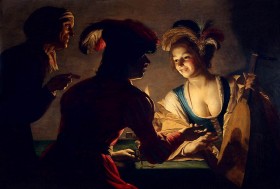
Painters often times try to capture the everyday event or a particular custom of the society. Here is one of such painting in which the Dutch painter has captured a moment in which a woman, a matchmaker, is approached by a man with money to get what he desires. The old man on the left seems to be the person who has bought the rich man to the lady matchmaker. There are two ways to interpret this painting. But first, lets understand the symbolism. Symbolism The painting has only one element of symbolism, the lute. The lute in matchmaker’s hands indicates love, sex or woman genitals based on the context, theme or subject. Use of Lute in paintings during the Dutch Golden Age was prominent. And it […]
 (16 votes, average: 4.13 out of 5)Loading...
Pieta, as a subject, relays the message of a sorrowful yet pride mother who has lost her son for the sake of humanity and other benevolent causes. The subject mainly became known after the sculpture Pieta by Michelangelo. His Pieta presented Mother Mary carrying lean, weak and dead Jesus in her lap and mourning over his death. Though, the artist intended to represent the delicate scene where Mother Mary is mourning but at the same time can’t regret her son’s death due to the great cause for which he did the ultimate sacrifice. Pieta represents a mother’s dilemma who can’t decide if she should cry for her son’s death or take pride out of it. And this difficult situation, where a mother is forced to […]