
20th Century Archive

1 Star2 Stars3 Stars4 Stars5 Stars (3 votes, average: 3.67 out of 5)
Loading...

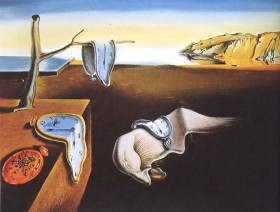
Dali’s paintings always forced us to interpret meanings out of the irrelevant things he put in his paintings. They were sometimes grotesque, sometimes beautiful, dreamy, alien or totally unrelated to the world. But, every painting made sense through Dali’s own symbolism which often represented a subject. Though, the subject could be a message or just a simple depiction of an intriguing muse or something which grabbed Dali’s attention. Melting Watches and Unreal Creature For many critics, The Persistence of Memory is a demonstration of a dream world. It includes all the elements a dream could have. Though, the title itself represents the painting as being a memory fading away after a long time. Or being distorted after considerable time period. Reason for critics to interpret […]
Read More...

, , , , ,

1 Star2 Stars3 Stars4 Stars5 Stars (1 votes, average: 1.00 out of 5)
Loading...

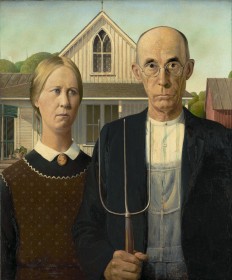
Two simple American faces, one staring at us and another staring away blankly. A pitchfork in the man’s hand and an American Gothic house in the background. These simple things have made the picture so popular that it has appeared in almost all kind of media in modern times. From the Simpsons to The Rocky Horror Picture Show and from the every magazine (such as Time) to big movies, the painting has appeared, parodied, copied numerous times. Today it enjoys the similar popularity gained by other iconic paintings like The Scream by Edvard Munch and Mona Lisa by Leonardo da Vinci. The gloomy faces of the couple may have indicated them as being a couple in their old times and having not-so-well life. But, an […]

Read More...

, , , , , , ,

1 Star2 Stars3 Stars4 Stars5 Stars (No Ratings Yet)
Loading...

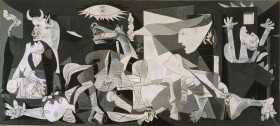
Guernica is a well-appraised painting by the acclaimed artist Pablo Picasso. This mural sized painting was artist’s reaction to the real life bombing on the town of Guernica in Spain during the Spanish Civil War in 1937. The painting and its world-tour during the year helped largely to bring the world’s attention towards the ongoing civil war and its harsh consequences. Today, the painting has become the anti-war symbol. According to some reviewers, the painting was the greatest accomplishment of Picasso’s career for its impacts on the world about the bombing. Picasso and his fellows pushed Cubism ahead with entirely accepting the art-movement and the represented art is a piece of cubist art. The Real Guernica Bombing Bombing of Guernica happened on 26th April, 1937. […]

Read More...

, , , , ,

1 Star2 Stars3 Stars4 Stars5 Stars (No Ratings Yet)
Loading...

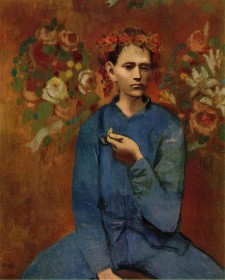
Pablo Picasso’s second most expensive painting of all the time. The boy sitting in blue clothes with red-brownish background and flower paints on the wall is having a smoking pipe in his hand and a garland on his head. Picasso was around 24 years old when he painted this art-piece. Moreover, the painting belongs to his Rose Period. Apparently, it was the time, when Picasso was painting the natural figure before he jumped into the Cubism Movement, which gave us the Guernica. The latest price of the panting in May, 2004 was around $104 million ($129 million with adjusted price inflation), which was highest price for a painted sold at an auction. The recent trend to buy a painting at big price tag just because the […]

Read More...

, , , , , ,

1 Star2 Stars3 Stars4 Stars5 Stars (1 votes, average: 5.00 out of 5)
Loading...

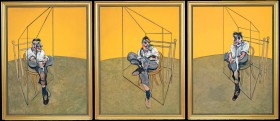
Made in 1969, the three studies of Lucian Freud were made by Francis Bacon and is the most expensive painting of all time sold at an auction by November 2013. The price tag without adjusting the inflation is around $142.4 million. Francis Bacon was a figurative painter and painted many of his paintings in such triptych style. According to his statement he always saw images in series. And thus, he painted those series in triptych styles. The current one has become his most famous painting after the auction. It depicts his friend Lucian Freud sitting in three different positions in an imaginary background and a linear box. The figure seems to be deformed or distorted and the face of the person has gone to the […]

Read More...

, , , , , , ,

1 Star2 Stars3 Stars4 Stars5 Stars (1 votes, average: 1.00 out of 5)
Loading...

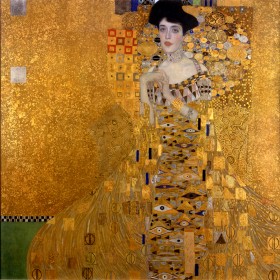
Referred sometimes as the Austrian Mona Lisa, “Portrait of Adele Bloch-Bauer I” by Gustav Klimt is a world-known portrait of a wealthy society aristocrat woman named Adele Bloch- Bauer. The whole painting is depicted with real gold and silver leaves, and some regular oil paint. There was also another portrait of the woman called Adele Bloch Baucer II. The Painting made the Austrian artist so famous and main stream, that after the exhibition of the work, he got many commissions. The painting was from his golden age during which he worked with real gold and silver for his paintings. This wasn’t his first time use of paintings. Painting broke all records of being expensive in June 2006 by a staggering amount of $135 million paid by […]

Read More...

, , , , , , ,

1 Star2 Stars3 Stars4 Stars5 Stars (9 votes, average: 4.22 out of 5)
Loading...

Le Reve (“Dream” in French) is Pablo Picasso‘s most famous, expensive and also controversial painting of all the time. The highly contrasting colors and the overly simplified depiction is from Picasso’s period of distorted depictions. He had various periods of different types of depictions in his art during his lifetime. This style is said to be near style of Fauvism, which also used contrasting colors. A little controversy attached to this piece of art is that Picasso has depicted an erect penis over the face of the woman, which is not official but many critics believe it to be portrayal of his own. Artists do include hidden messages, ideas or designs in their paintings often and the apparent resemblance of the painting is provoking the critics […]

Read More...

, , , , ,

1 Star2 Stars3 Stars4 Stars5 Stars (No Ratings Yet)
Loading...

Woman series by the Dutch-American Abstract-Impressionist painter is his most recognized painting series. The third painting of the series simply called Woman III brought him success beyond his imagination. Woman III was executed in 1953 and was sold for the staggering amount of $137.5 million in a private sale in 2006. It wasn’t for the first time for any of Kooning’s painting sold for a big price tag. He has a history of selling his paintings for big amounts which brought good fortune for him too. In this Oil on canvas painting, contrary to normal belief, Kooning took a great care for his painting, instead of just waving his brush on canvas lazily. Allegedly, he was more about creating a chaotic effect than imitating the […]

Read More...

, , ,

1 Star2 Stars3 Stars4 Stars5 Stars (7 votes, average: 2.29 out of 5)
Loading...

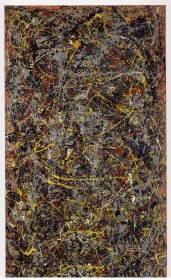
Jackson Pollock was very much popular during 1940s and 1950s for his Drip Paintings. He had invented a whole new style with thick paint and big brushes on canvases large enough to cover entire walls. He would lay those canvases on the ground and than after putting a leg on the canvas, he would begin to paint his masterpieces. The outcomes would be totally unconventional, unprecedented and intriguingly beautiful. No. 5, 1948 Analysis The presented piece is his most known, famous art-piece and the peak of his drip paintings.The style of the painting is called Abstract Expressionism. It also has some elements of Impasto technique. The design seems to be forming a pattern similar to a nest or thick threads put disorderly on each other. Either way it is […]

Read More...

, , , , , ,

1 Star2 Stars3 Stars4 Stars5 Stars (1 votes, average: 3.00 out of 5)
Loading...

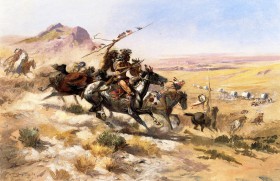
This 1902, oil-on-canvas painting , “Attack on a Wagon”, is a work of an Old American West artist Charles Marion Russell known as the ‘cowboy artist’. It is a depiction of a bunch of red-Indians attacking on the wagon train of white men. The scene is from the time around mid-1800s, when the American government started to expand their lands. In this process, the wide-spread red-Indians across all of the USA were the main interruption for the government. Government used harsh techniques in the acquisition. By attacking on the tribes with much advanced and powerful weapons than those traditional Indians who had spears as the most advanced technology. To stay safe, some tribes leaned under and started to live on the lands given by the government. […]

Read More...

, , , , , , ,