Hierarchy Archive

Loading...
This painting includes a total of 112 Natherlandish proverbs in a single scene. The proverbs are taken literally. For instance, “To crap on the world” is literally represented as a person crapping on a globe. The depiction is on the left corner of the picture where a man in red clothes is coming out of a window. Artist of the Flemish renaissance from 16th century, Pieter Bruegel the Elder was known for similar works, which included The Seven Deadly Sins, The Months, Big Fish Eats Little Fish and The Blind leading the Blind. Pieter Bruegel the younger, the artist’s son had depicted more than 20 versions of the paintings. Here is one of them.
Read More...
Devil, Dutch, Fish, Flemish, Flemish Renaissance, Fool, Man, People, Pig, Sheep, Snake, Village, Woman
Loading...
The first version of Massacre of the Innocents by Rubens was made in 1612. Here is represented the second version made in 1638, which resembles some similarities to the original while brutalizes some aspects even more than the first one. The subject matter and the scene is elaborately described in the first version’s iconography. The second version is painted after 25 years of the first one and it hasn’t lost its impact. Actually, Rubens has made it more intense and gruesome than the first one. More realistic approach than the first version In here, the emphasis is on the use of weaponry to kill infant. In the first version, soldiers were depicted in a moment in which they were killing either snatching the infants from […]
Read More...
Angel, Children, Famous, Flemish, Flemish Baroque, Jewish, Man, Mother, Motherhood, Soldier, Woman
Loading...
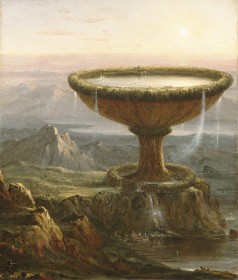
The Titan’s Goblet by American artist Thomas Cole is a romantic landscape painting which combines the elements of reality and fiction into one and creates a fictional landscape with very conveying representation. It was made in 1833. The composition The setting of the landscape is regular with mountain ranges, setting sun, a river (or lake) and big bright sky of evening in the background. It is an aerial view of the scene. Until this, it is a regular landscape painting. But, the point of interest in it makes the whole difference moving it from the category of landscape to the sub-categories of romantic and fictional landscape. A big, made out of rock goblet stands slightly on the right side of the painting. It is full […]
Read More...
American, English, Goblet, Greek Mythology, Romanticism, Sunset
Loading...
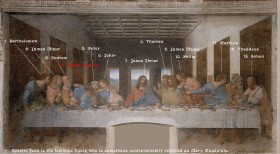
In The Last Supper by Leonardo da Vinci, there are total of 13 apparent figures apparent – if we ignore the controversial and sometimes conjured up figures in the painting. Twelve of them are the 12 apostles of Jesus while the central figure is Jesus Christ himself. The 12 apostles are grouped into the team of 3. Thus, total of 4 groups of Apostles are there. In the second group made of Judas, Peter and John is where the most controversies circles around. It holds the two characters that had radical impacts on Jesus’s life. As everybody knows, Judas was the reason to make this supper of Jesus the last supper. Here is brief information on each of the characters: 1. Bartholomew Born and died: […]
Read More...
Famous, Jesus Christ, Last Supper, Religious
Loading...
Issac Van Amburgh is a name less celebrated today, but he was God for many during the 1800s. The man died aged about 65, and left a legacy that I will definitely remember when I see the next freak playing with a leopard or crocodile on National Geographic. Animal trainer and knighthood recipient, Van Amburgh was one of the most popular animals man in his day. He is also responsible for introducing lions, panthers, tigers and the lot to circus. Such was the prowess of his training abilities. The painting depicts an occasion when he surprised everybody by entering a cage with a lion, a tiger, two leopards, a bear and a lamb! Legend has it that he also faced a panther on a similar […]
Read More...
Animals, Man
Loading...
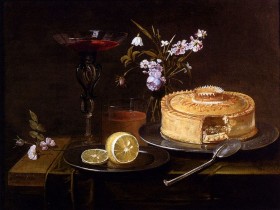
If you remember newspaper and billboard advertisements of good-looking accessories such as handcrafted collectibles, you will know how affluent senses can be tickled in a still life painting or a close up. It is not easy for painters, as tickling of the senses requires perfection and style, which are relatively easier to achieve by camera in a studio. However, for Frans Ykens, the lights had to be replaced with brush strokes and intelligent color play, while he himself played the camera. The combination of items you see in the painting signify an auspicious occasion. However, it could also part of the daily arrangements for a very wealthy woman. The owner of these items is surely a female because men who love bingeing, would rarely chance […]
Read More...
Beautiful, beer, Belgian, Flemish, Flemish Baroque, Flower, Lemon, Pie, Spoon, Vase, Wine
Loading...
The showcased piece of art is from the Belgian Surrealist artist René Magritte. It was painted in 1964. It showcases a simple depiction of a person standing. In background is visible sea, cloudy sky and a low, brick wall. The person has worn an overcoat, with red tie and a bowler hat. Thus the whole composition doesn’t include any fancy stuff. Though, the apparent catch is in the face where right in front of the character’s face is a green apple. As intriguing and unforgivable impact the painting makes on a general audience, the philosophy behind such unique arrangement is also equally interesting. The Son of Man philosophy and Analysis Although, most of the artists do not answer in clear way about the motif of the their […]
Read More...
Belgian, Bowler hat, Famous, Hat, Man, Man in Suit, Man with Hat, Sea, Surrealist
Loading...
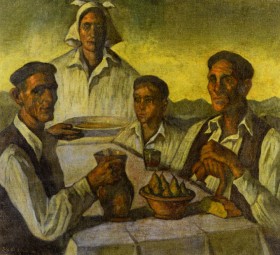
Peasants are dining while the light in the painting backdrop suggests it is twilight. Valentin de Zubiaurre’s painting has become the hallmark of rural wellbeing, especially with the issues of nutrition in villages across the world today. For me, the painting signifies much to do with world food exchanges through governments. Besides, the rice farming fields had stayed much in dispute over colonists and natives in 19th Century Spain. For the painter born in 1879, such a history definitely spelled inspiration. One can gather a lot about history from Zubiaurre’s works. Spanish rebellion during the 1800s etched local culture with stories of rice fights and self-dependent farming, and the painter saw almost nothing nobler than his rural subject in a period that just followed. Valentin de […]
Read More...
Peasant
Loading...
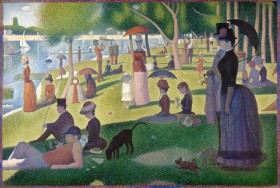
A Sunday Afternoon on the Island of La Grande Jatte is a fine example of Georges Seurat’s pointillism. Painting took him two years to complete and during the first year he didn’t included the pointillism in the art work. He made the painting on the island of La Grande Jatte near Paris. Pointillism The painting is depicted in the style of pointillism which was called divisionism at the time of the execution. It is an assemblage of small dots and very small brush-strokes to create a full picture. If looked from a certain distant it creates a perfect picture. Though, at a closer look it seems to be just the collection colorful dots. Even the faces which seems to be having nose, eyes and lips […]
Read More...
Afternoon, Beautiful, Dog, Famous, Fishing, French, Garden, Island, Monkey, Pet, Pointillist, Post-impressionist, River, Umbrella
Loading...
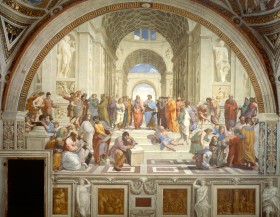
Athens is the largest city in Greece and has been respected as one of the important cities in the Greek history. It was epicenter of arts and philosophy in Greece and thus many big minds had gathered in the city time to time. Big philosophers like Plato and his student Aristotle were active in the city in their times. Athens has been the pivotal point in the Greek history and has seen the presence of the greatest minds of the country. Here, Raphael has smartly included all the big figures from the Greek history in a “school” which could represent the Greece’s history, Greece or the city of Athens where these great minds came across at least for once in their lifetime. Convergence of Great […]
Read More...
Alexander the Great, Apollo, Athena, Famous, God, Goddess, Greek, Italian, Italian Renaissance, Mathematician, Philosopher, Renaissance, Roman





 (2 votes, average: 4.50 out of 5)