 (No Ratings Yet)
 Loading...
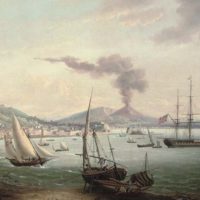 An English Frigate In The Bay Of Naples by John Thomas Serres
 Figures on a beach near Naples by Giovanni Serritelli
 View of Brussels from the NorthEast by Hercules Seghers
 Cattle watering in a River Landscape, believed to be Chile by Thomas Jacques Somerscales
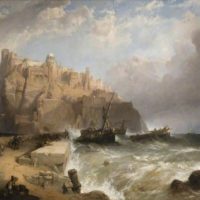 The Castle of Ischia by Clarkson Stanfield
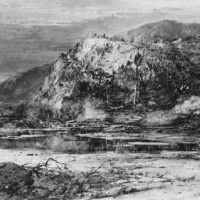 Landscape with Rocky Hills and Stream by William Louis Sonntag
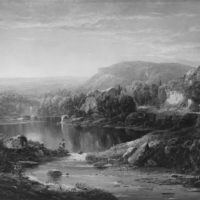 Landscape with Waterfall and Figures by William Louis Sonntag
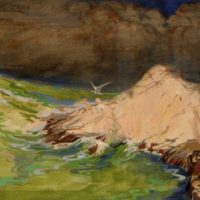 The Tale Of Kynon by George Sheringham
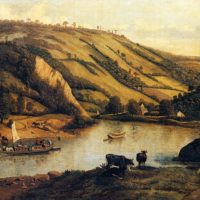 An Extensive River landscape, Probably Derbyshire, With Drovers And Their Cattle In The Foreground by Jan Siberechts
 Landscape with Rainbow, Henley-on-Thames by Jan Siberechts
Women have been a major part of the art of painting. Whether it is the the Renaissance period, Dutch Golden age or the 21st century. Women in painting are mostly depicted as a sensual muse. But, on the other hand, feminine figures are also used to represent maternity, goddesses, innocence and beauty. Sometimes, women are used as symbols for various things including godly figures, sensual representations, lust, etc. The world’s most popular painting, Mona Lisa, is also a portrait of a woman.
Thus, women are a major part in the art of the painting, as obviously they are in the real life in every society. Due to the art periods, their representations have been changed, though. Before renaissance, around 12th and 13th century, the figure of a woman was mostly used to represent goddesses, Madonna or the followers of gods. Though, as the renaissance period (ranging from 14th to 17th century) brought big changes in every arts and subsequently in subjects, the element of woman changed its definitions to more sensual representation. In renaissance, artists trying to understand the human anatomy explored a woman’s body-structure and used that knowledge to enhance their perfection of women in the painting – just like they did with man’s anatomy.
During the renaissance, after learning to depict every curves of the body, the shift of representing women into a sensual subject was universal. Even in some religious subjects, women were portrayed in half or total nakedness. The change was admired by the most viewers and the legacy has continued today. Nowadays, depicting nude woman is nothing of a news. It is accepted as the basic learning curve for any new artist. There are many artists whose subject is particularly devoted to the nude women.
As always reflects the contemporary nature of the society and social views towards any subject, we can presume that over the years artists and art-admirers have accepted the element of woman in painting with more open-minded approach and with an artistic admiration. Today, we are standing about to reach the cultivation in conventional methods of arts and are trying to explore new methods. And in those new methods, the subject of women will bring new meanings, symbolism and aspects of the subject.
 (1 votes, average: 1.00 out of 5)Loading...
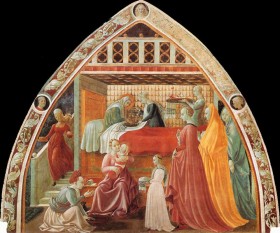
Being one of the most important biblical events, “the birth of the virgin”, or the birth of Mary, is a source of inspiration for many artists in history and contemporary times. Uccelo’s fascination with the Christian stories, and those, which marked his times, often resonate with each other in his Italian old-town frescoes. Here, the birth of the virgin is momentous, in which the kin folk and everyone else around are all up and about to make things easier, better and happier. Notice the lady swishing down the steps with the needed items, and the well-attended room in which The Virgin is getting blessed by almost everybody. It is easy to imagine why Uccelo’s imagination about the birth of Mary coincides and shows up as […]
 (No Ratings Yet)Loading...
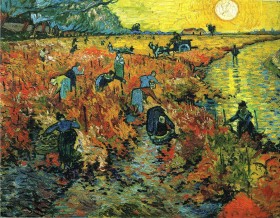
This is supposedly the first and the only painting by Vincent van Gogh which he sold during his lifetime. Against the sky-high prices we see now for a Van Gogh work, at the time Van Gogh sold it for 400 francs to a Belgian lady painter Anna Boch. She was a collector of good art-works and admirer of young artists of her time. Another painting owned by Anna Boch was The Peach Blossoms in the Crau. Vincent van Gogh painted this piece from his memory and some aspects of imagination. It was created at The Yellow House in Arles, France.
 (No Ratings Yet)Loading...
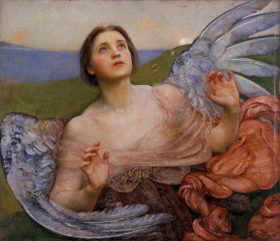
The sense of light can be a very special feeling, especially when you have remained indoors, or gained vision by some miracle after blindness. The presence of a miracle is quite obvious in Annie Swynnerton’s painting here in oil-on-canvas, deliberately portrayed through the wings of the angelic woman. However, this has more to do with the woman being an angelic being, rather than just anyone receiving a miraculous decree. The hopeful look into the sky is so unblemished, that she hopes it will culminate into complete euphoria pretty soon. Swynnerton is a woman of courage – something one can find in her paintings. Although she was a major contributor in feminism in the early 1900s, her admiration for miracles, characters, principled people, uniqueness and innocence […]
 (2 votes, average: 4.00 out of 5)Loading...
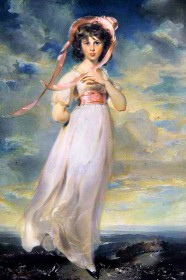
Pinkie is simple, formal portraiture from 1794 of a little 12 years old girl named Sarah Barrett Moulton. It represents her full length portrait in the background of an open landscape. She stands gracefully gazing direct into the viewers’ eyes. Apart from its beautiful depiction, Pinkie is also known for its association with another painting The Blue Boy by Thomas Gainsborough. Pinkie Analysis It is a full length portrait representing the girl in a casual stance. The background is an open landscape. The name pinkie is given derived from her pink dress. Painter has put her in the scene in a way which makes her posture grand. The placement of the horizon at very low level and the big sky covering the girl’s body is […]
 (No Ratings Yet)Loading...
This painting includes a total of 112 Natherlandish proverbs in a single scene. The proverbs are taken literally. For instance, “To crap on the world” is literally represented as a person crapping on a globe. The depiction is on the left corner of the picture where a man in red clothes is coming out of a window. Artist of the Flemish renaissance from 16th century, Pieter Bruegel the Elder was known for similar works, which included The Seven Deadly Sins, The Months, Big Fish Eats Little Fish and The Blind leading the Blind. Pieter Bruegel the younger, the artist’s son had depicted more than 20 versions of the paintings. Here is one of them.
 (No Ratings Yet)Loading...
The first version of Massacre of the Innocents by Rubens was made in 1612. Here is represented the second version made in 1638, which resembles some similarities to the original while brutalizes some aspects even more than the first one. The subject matter and the scene is elaborately described in the first version’s iconography. The second version is painted after 25 years of the first one and it hasn’t lost its impact. Actually, Rubens has made it more intense and gruesome than the first one. More realistic approach than the first version In here, the emphasis is on the use of weaponry to kill infant. In the first version, soldiers were depicted in a moment in which they were killing either snatching the infants from […]
 (1 votes, average: 1.00 out of 5)Loading...
The Kiss is Gustav Klimt’s most famous painting from his whole career and also from his ‘golden period’ during which he used real gold and silver leaf in his paintings. The artist’s recent sensual works before The Kiss acquired him the title of enfant terrible, meaning the terrible child. A term used for the geniuses who have the unorthodox views towards the conventional wisdom. The Kiss isn’t especially sensual. Instead, it was well reviewed by the viewers and gained the artist some more reputation during his golden time. Though for his other scrutinized works he famously quoted, “If you can not please everyone with your deeds and your art, please a few”. The painting represents a couple busy in romantic apogee of sensual pleasure. The man in the long robe is […]
 (No Ratings Yet)Loading...
Woman series by the Dutch-American Abstract-Impressionist painter is his most recognized painting series. The third painting of the series simply called Woman III brought him success beyond his imagination. Woman III was executed in 1953 and was sold for the staggering amount of $137.5 million in a private sale in 2006. It wasn’t for the first time for any of Kooning’s painting sold for a big price tag. He has a history of selling his paintings for big amounts which brought good fortune for him too. In this Oil on canvas painting, contrary to normal belief, Kooning took a great care for his painting, instead of just waving his brush on canvas lazily. Allegedly, he was more about creating a chaotic effect than imitating the […]